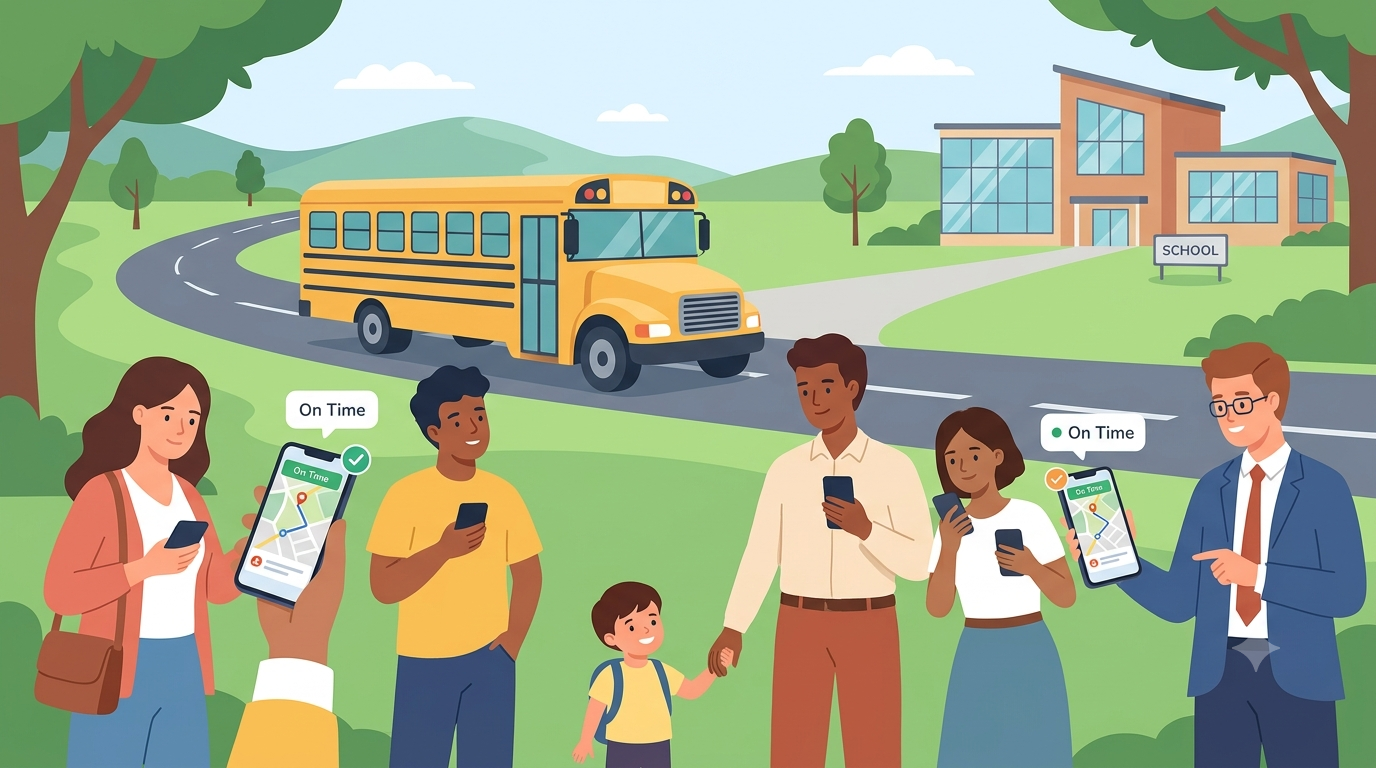
Would you trust a school more because its buses never had a single delay in ten years — or because every time something went wrong, you found out about it within minutes, from the school itself?
Most schools assume parent trust is built by avoiding problems. In reality, trust is built by how problems are communicated — and that single distinction is quietly shaping which schools parents recommend, stay loyal to, and warn other parents away from.
“Parents don't expect a perfect transport record. They expect to never be the last to know.”
Two Schools, Two Reputations
Picture two schools with nearly identical transport systems — same bus age, same routes, same occasional delays and breakdowns. The only difference is how each one communicates. Within a year, parents at these two schools tell completely different stories about the exact same kind of morning.
Opaque School
- Parents find out about delays from their own children, not the school
- The front office is flooded with calls every time something goes wrong
- Each incident becomes a story parents repeat — and exaggerate — to other parents
- Trust erodes quietly until a single bad morning becomes "the last straw"
Transparent School
- Parents get a notification before they'd even think to ask
- The same incident generates almost no inbound calls
- Parents describe the school as "on top of things," even when something went wrong
- Trust compounds over time, making isolated incidents forgettable
Notice what didn't change: the breakdown still happened. The bus was still late. What changed the story parents tell is purely the communication layer around the event.
Why This Matters More Than Schools Think
Transport is one of the only parts of school life parents can't directly observe. They can't see the classroom, but they can absolutely sense — within days — whether the school tells them things proactively or makes them chase information. That sensitivity makes transport an outsized signal for trust in everything else the school does.
Word-of-mouth runs on transparency, not perfection
Parents talk to each other constantly, especially in school WhatsApp groups and at pickup lines. A parent who felt informed during a delay tells other parents "they're really good about letting you know." A parent who felt left in the dark tells a very different story — and that version travels faster.
Enrollment and retention quietly track trust
Families rarely leave a school because of one bad transport day. They leave because a pattern of feeling uninformed convinces them the school doesn't have things under control. Conversely, schools known for transparent communication become the ones existing parents recommend to prospective ones.
Transparency reduces the operational burden, too
Every parent who already knows what's happening is one fewer anxious call to the front office. Schools that communicate proactively often find their staff spend less time managing parent anxiety — not more time managing communication.
It becomes a genuine point of difference
In a landscape where most schools' transport quality looks similar on paper, the schools known for visible, dependable communication stand out — often more than schools with marginally newer buses or slightly shorter routes.
Trust built in calm weather holds up in a storm
The schools that communicate well on an ordinary delayed Tuesday are the same ones parents extend patience to during a genuine emergency. Trust isn't something you can build in the moment of a crisis — it has to already be there.
1 story
Every incident becomes a story parents repeat — transparency decides which version
0 surprises
Goal isn't zero incidents — it's zero moments parents feel blindsided
Years
Trust compounds slowly, but erodes fast after one badly handled incident
What Transparency Actually Looks Like
Transparency isn't a single grand gesture — it's a set of small, consistent habits that together tell parents the school is paying attention.
🔍
Visibility by defaultParents can check where the bus is without needing to ask anyone — visibility is the baseline, not a favor extended during a crisis.
⏱️
Speed over completenessA quick "we know, we're on it" beats a perfectly detailed explanation that arrives twenty minutes late.
🔁
Consistency, not just crisis responseSchools that only communicate well during emergencies feel reactive. The ones that communicate the same way on quiet days feel reliable.
5 Signs Your School's Transport Communication Builds Trust
Transparency Self-Check
Parents rarely call to ask "where's the bus?" — because they can already see it. Bad news travels from the school first — not from a child's text message. Every incident gets a close-the-loop message — not just an opening alert that's never followed up. Front-office staff aren't the main source of updates — they're freed up because parents already know. Parents describe the school as "on top of it" — even when recounting a day something went wrong.
Reputation Is Built in the Ordinary Moments
No school chooses its reputation directly — it's assembled, conversation by conversation, out of how parents felt during dozens of small, forgettable mornings. A delayed bus, a rerouted stop, a brief mechanical issue: none of these are reputation-defining on their own.
What is reputation-defining is whether parents felt like partners in those moments, or like the last to find out. Schools that get this right aren't necessarily running flawless transport — they're running transparent transport, and parents reward the difference.
Frequently Asked Questions
Does transport transparency actually affect school enrollment and retention?+
Yes. Families rarely leave a school because of a single bad transport day — they leave because a pattern of feeling uninformed convinces them the school doesn't have things under control. Schools known for transparent, proactive communication tend to become the ones existing parents actively recommend to prospective families.
What is the difference between an "opaque" school and a "transparent" school when it comes to transport?+
An opaque school has parents finding out about delays from their own children and flooding the front office with calls when something goes wrong. A transparent school notifies parents before they'd think to ask, generates almost no inbound calls during the same kind of incident, and leaves parents describing the school as "on top of things" even when a problem occurred.
How quickly does a parent notification need to go out for a delay to feel transparent?+
Speed matters more than completeness. A quick message acknowledging the issue — "we know, we're on it" — sent within minutes builds more trust than a fully detailed explanation that arrives twenty minutes later, after parents have already started to worry.
Does transport transparency require a school to have a flawless transport record?+
No. Parents don't expect zero incidents — they expect to never be the last to know about one. The goal of transparency isn't a perfect operational record; it's zero moments where parents feel blindsided by information they should have received directly from the school.
How does transparent transport communication reduce the burden on school front-office staff?+
Every parent who already knows what's happening is one fewer anxious phone call to the front desk. Schools that communicate proactively through automated alerts typically find their staff spend less time managing parent anxiety reactively, since most parents already have the information before they feel the need to ask for it.
What are the signs that a school's transport communication is genuinely building trust?+
Five signs stand out: parents rarely call to ask where the bus is, bad news reaches parents from the school before it reaches them from their own children, every incident gets a follow-up close-the-loop message, front-office staff are freed from being the main source of updates, and parents describe the school as "on top of it" even after something went wrong.
Can one badly handled transport incident undo years of built-up parent trust?+
It can do serious damage. Trust compounds slowly over many small, well-communicated moments, but it can erode quickly after a single incident that leaves parents feeling like the last to know. This asymmetry is exactly why consistency — not just crisis-time effort — matters so much.
Why does transport communication carry so much weight in shaping overall school reputation?+
Transport is one of the only parts of school life parents cannot directly observe. They can't see what happens in the classroom, but they can sense within days whether the school tells them things proactively or makes them chase information — which makes transport an outsized signal for how much they trust everything else the school does.
Build transport transparency parents actually notice
Live tracking, instant parent alerts, and a clear communication trail for every incident — MyTripzo gives schools the visibility that earns trust before it's ever tested.
Book a Tripzo DemoNo commitment · 20-minute walkthrough · See it live