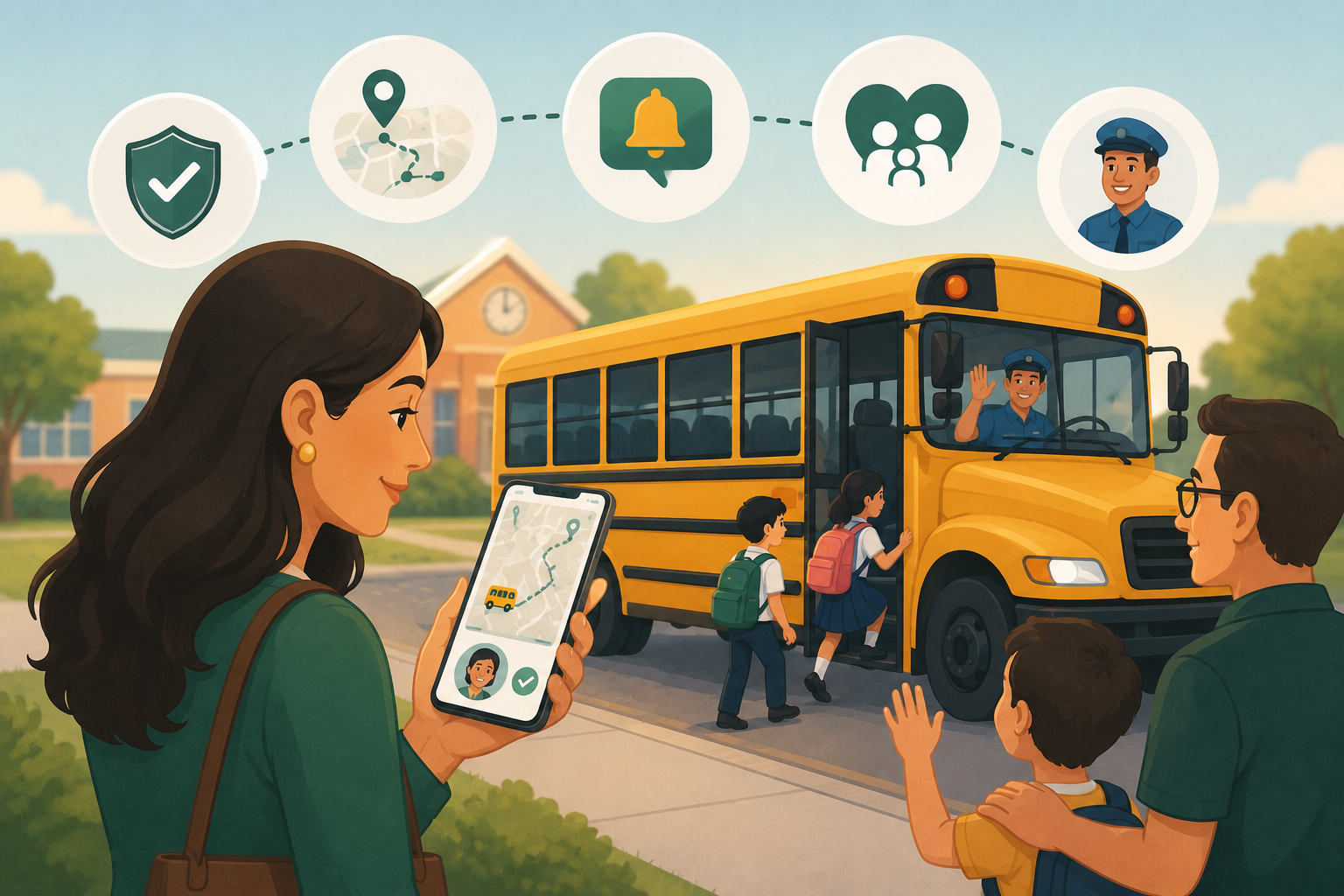
A few years ago, “good” school transportation mostly meant the bus showed up, more or less on time, most days. Parents adjusted their expectations around the system's limitations because there wasn't really an alternative.
That baseline has moved. Parents now carry the same expectations from food delivery, ride-hailing, and package tracking into how they think about their child's commute — and a transport system that doesn't meet that bar feels behind, even if it's running exactly as well as it always has.
“Parents aren't asking for more than schools can give. They're asking for what every other part of their day already gives them.”
The Bar Has Shifted
It's worth being specific about what's actually changed, because it's not that parents have become harder to please. It's that the reference point they're comparing school transport against is different now.
None of this is about parents wanting more attention paid to their specific child. It's about a baseline expectation of visibility that now applies to nearly everything in their lives — and school transport is no longer exempt from it.
Five Things Parents Actually Prioritize
Each of these stands on its own — there's no single trade-off parents are making between them. They're five separate expectations schools now need to meet simultaneously.
Real-time visibility
Parents want to be able to check where the bus is themselves, on their own schedule, without needing to ask anyone. This isn't about anxiety — it's the same instinct that makes someone check a delivery tracker, applied to their child's commute.
Proactive communication
Being told something before they have to ask has become the expected default, not a bonus. A school that waits to be asked feels, to a 2026 parent, like it's behind rather than simply being reactive.
Visible safety assurance
Parents want to know — not just assume — that drivers are vetted, vehicles are maintained, and there's clear accountability if something goes wrong. Safety hasn't become more important than it used to be; what's changed is the expectation that schools demonstrate it rather than simply state it.
Convenience and flexibility
Updating a pickup detail, reporting an absence, or asking a quick question should take a minute inside an app, not a phone call during office hours. Parents increasingly judge a school's transport system by how easy these small interactions are.
Consistency over occasional perfection
Parents don't expect flawless service. They expect a predictable, dependable routine — and they notice consistency far more than they notice the rare day everything goes exactly right.
Why This Shift Caught Some Schools Off Guard
Transport hasn't necessarily gotten worse at the schools parents are now less satisfied with. In many cases, it's running exactly as it has for years. What changed is everything else in a parent's daily life — and transport simply didn't move with it.
That's an easy gap to miss internally, because from inside a school, the system looks the same as it always has. The shift is only visible from the parent's side of the relationship, which is exactly why it's worth checking in on directly rather than assuming things are fine because nothing obviously broke.
Related reading: The Parent Trust Factor: How Transportation Transparency Improves School Reputation, and How Schools Can Reduce Transportation Complaints from Parents.
2026 Isn't a Higher Bar — It's a Different One
It can feel like parent expectations are simply getting harder to satisfy every year. A more accurate read is that the kind of expectation has changed shape: it's less about outcomes being perfect and more about the process being visible, fast, and easy to engage with.
Schools that adapt to this aren't doing something extra — they're catching up to where the rest of a parent's life already is. That's a more achievable target than it might first sound.
Frequently Asked Questions
Meet 2026 expectations without overhauling everything
Live tracking, proactive alerts, and an easy way for parents to manage the small things — myTripzo is built around what parents actually expect today.
Book a Tripzo DemoNo commitment · 20-minute walkthrough · See it live